Burgundy Wine Facts: Appellations, Grands Crus and the Climats
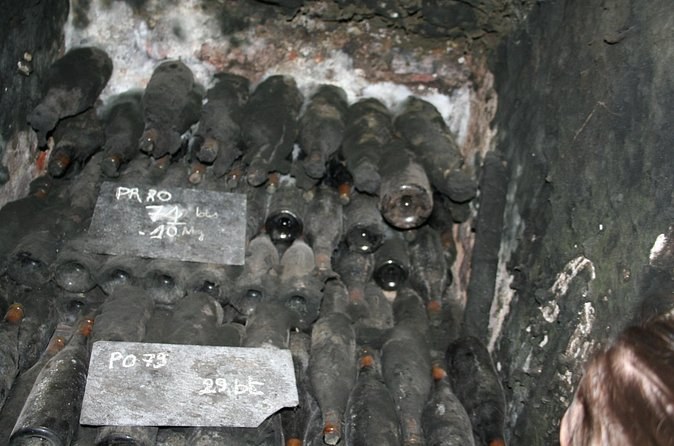
The short answer. Every figure here comes from the BIVB, UNESCO or the Hospices de Beaune. Burgundy has 28,841 hectares of vines, 3% of France's, along 230 km. It has 84 appellations, 33 of them Grands Crus, and 1,247 Climats on the World Heritage list. Most of its wine is white. And a hospital founded in 1443 still owns 60 hectares of vines.
The figures at a glance
| Figure | What it measures | Source |
|---|---|---|
| 28,841 ha | Vines under cultivation, 3% of France's | BIVB |
| 230 km | Length of the wine region, in six areas | BIVB |
| 84 | Appellations, 33 of them Grands Crus | BIVB |
| 1,247 | Climats listed as World Heritage in 2015 | UNESCO |
| 62% | Share of the region's wine that is white | BIVB |
| 60 ha | Vines owned by the Hospices de Beaune | Hospices de Beaune |
1. There are 84 appellations, not 100
For years the region claimed about a hundred. The BIVB now counts 84 and says the rest are extra place names allowed within an appellation. Even so, 84 is more than 23% of all the appellations given to French wines. The four levels they sit on are explained in Grand Cru, Premier Cru and Village.
2. It is only 3% of France's vineyard
The region's 28,841 hectares of vines are about 3% of France's commercial wine growing. The names are famous; the vineyard is small. That is one reason a single plot can carry a Grand Cru name and a price to match.
3. The region runs 230 km, in six areas
From north to south: Chablis and the Grand Auxerrois, the Châtillonnais, the Côte de Nuits and the Hautes Côtes de Nuits, the Côte de Beaune and the Hautes Côtes de Beaune, the Côte Chalonnaise and the Couchois, and the Mâconnais. The BIVB puts it an hour from Lyon and two from Paris. Every area is on the Burgundy map.
4. Most Burgundy is white
The reds are famous, but white wine is 62% of what the region makes. Reds are 29%, Crémant de Bourgogne 8% and rosé 1%. In the vineyard, Chardonnay covers 57% of the area, Pinot Noir 34% and Aligoté 6%.
5. Pinot Noir can make a white wine
A red wine takes its colour from the skins, soaked in the vat with the juice. Press Pinot Noir without that soaking and the wine comes out white. The BIVB names Crémant de Bourgogne Blanc de Noir as the example.
6. Gamay is named after a hamlet
The grape of the Mâconnais reds takes its name from a hamlet in Saint-Aubin, close to Puligny-Montrachet on the Côte de Beaune. Today it goes into Coteaux Bourguignons, Bourgogne Passe-Tout-Grains and some Crémants.
7. 1,247 Climats are on the World Heritage list
UNESCO listed the Climats of the Côte de Nuits and the Côte de Beaune in 2015. They run 50 km south of Dijon as far as Maranges. You can still see many boundaries in the landscape: paths, stone walls, fences and the heaps of cleared stones called meurgers. The appellation decrees of 1936 still define them.
8. Three buildings stand for that history
UNESCO names the ducal palace in Dijon, the Hospices in Beaune and the Clos de Vougeot's château as the trace of the powers that built the system. You can visit all three. The Palais des Ducs tower rises 46 metres, and you climb 316 steps to the top. The Burgundy region page covers both towns.
9. The Clos de Vougeot no longer makes wine
Monks from the Abbey of Cîteaux built it in the 12th century as a wine farm, and a Renaissance château followed in the 16th. The Confrérie des Chevaliers du Tastevin bought it in 1945 as the seat of its order. Its wall still closes almost 51 hectares of vines, but the château itself makes none; you visit it for the presses, the cellar and the kitchens.
10. A hospital built in a famine
Nicolas Rolin, chancellor to the Duke of Burgundy, and his wife Guigone de Salins founded the Hôtel-Dieu in 1443, during the Hundred Years' War. The Hospices say that poverty and famine then touched three-quarters of Beaune's people. It cared for the sick until the early 1970s, was listed as a historic monument in 1862, and has been open wholly to visitors since 1988.
11. The same hospital owns a wine estate
The Hospices de Beaune farm 60 hectares of vines, given over the centuries by benefactors, and make 53 historic cuvées. They sell them every year at auction, by tradition on the third Sunday of November. The 166th sale is on Sunday 15 November 2026, and one barrel, the Pièce de Charité, is sold for a cause: in 2026, research into rare diseases. The dates are on when to visit.
12. The Last Judgement has a double
The Hôtel-Dieu's best-known work is Rogier van der Weyden's polyptych of the Last Judgement. A facsimile made by the Factum Foundation now hangs in the chapel of the Salle des Pôvres, back in its setting as an object of devotion, and the original is still kept at the Hôtel-Dieu ahead of its restoration.
13. The wine road starts at kilometre zero in Dijon
The Route des Grands Crus begins in Dijon and runs south to Beaune and Santenay. So when you leave Dijon on a Côte de Nuits day, the first vines you pass mark the start of the Route des Grands Crus itself. The vineyards page follows it village by village.
14. Burgundy grew up on a trade route
Since the Middle Ages the region has sat on one of the main roads between northern Europe and the Mediterranean, the link between the Rhône valley and the Paris basin, according to the BIVB. Its weather mixes three influences too: Mediterranean, continental and oceanic.
15. The Cité des Climats has three sites
The Cité des Climats et vins de Bourgogne opened in three towns: Beaune, the largest, then Chablis and Mâcon. Each covers its own part of the region, and each visit ends with two glasses of wine. Check the hours before you go.
How to use these facts on a tour
Bring a few of these into the cellar and you will get more from the glass. Ask whether the wine in front of you is Régionale, Village, Premier Cru or Grand Cru, and you will know how small its plot is. Ask which climat it comes from, and your guide will usually show you on a map. And when somebody pours a white Crémant, ask if it is a Blanc de Noir.
Days that add the history to the wine
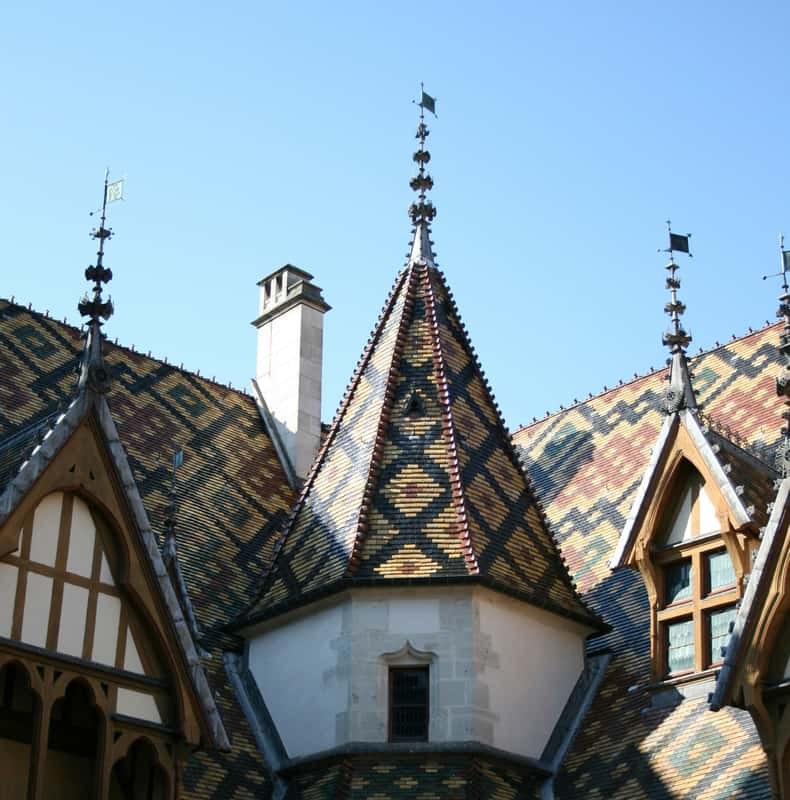
From Dijon: Burgundy Villages, History & Culture
Flavigny-sur-Ozerain, Semur-en-Auxois and Châteauneuf-en-Auxois from Place Darcy with a driver-guide. No wine tasting in 2026, so it suits a day off the glass.
From $241 per person
Check Availability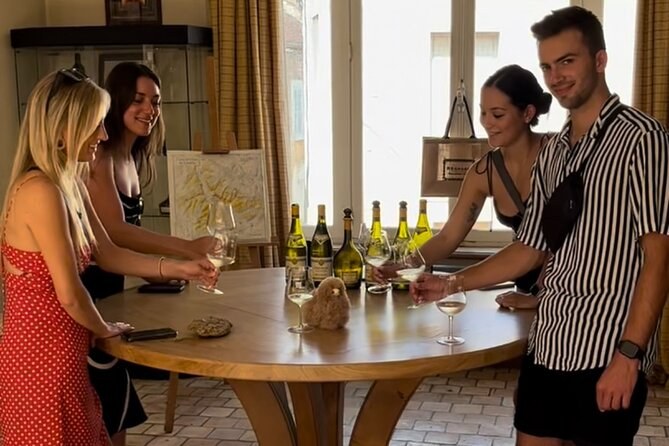
Burgundy Wine & Cheese Tasting Private Day Trip 15 glasses
A private car from your Paris hotel at 7:30 am to Chablis and Beaune: Brocard, a Chablis grower, the Château de Pommard, and your entry to the Hôtel-Dieu.
From $1,510 per group, up to 2
Check AvailabilityNext: See how the four levels work in the glass on the classification explained. Every fare sits side by side on Burgundy Tours.