From Dijon: Burgundy Villages, History & Culture
Flavigny-sur-Ozerain, Semur-en-Auxois and Châteauneuf-en-Auxois from Place Darcy with a driver-guide. No wine tasting in 2026, so it suits a day off the glass.
From $241 per person
Check AvailabilityBurgundy is a wine region 230 km long, and your trip is built around its towns. Dijon and Beaune hold the two ends of the Côte, the wine villages sit between them, and Chablis and Mâcon lie far to the north and south. Choose your town first, then match it to the Burgundy guided tours that start there.
The wine board, the BIVB, puts the region an hour from Lyon and two from Paris. Most visitors see only its middle: the Côte d'Or, the slope of vineyards south of Dijon. That is where UNESCO's Climats of Burgundy lie, and where most of your tastings will be poured.
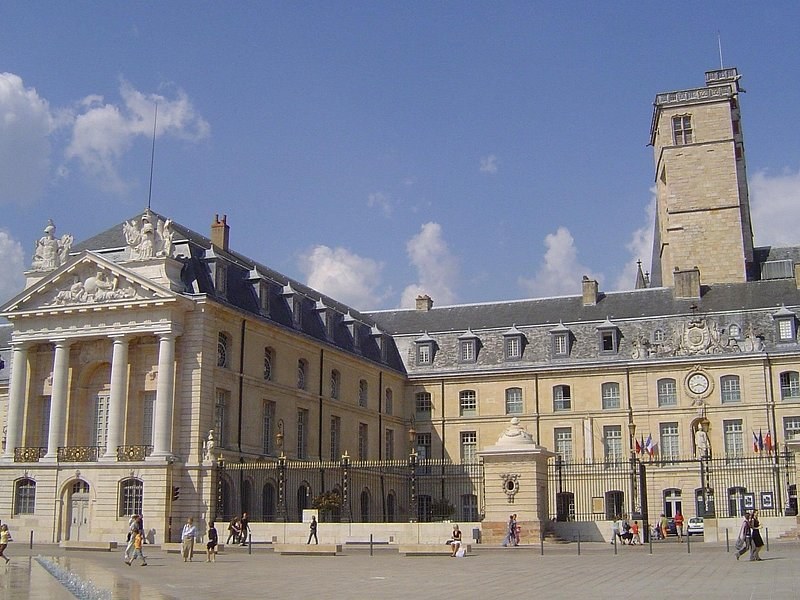
Dijon sits at the northern end of the Côte d'Or. UNESCO lists its historic centre as the political side of the Climats: the power that named and protected each vineyard parcel. It names the Ducal Palace, the Palais des Ducs, as one trace of that power, with the Hospices of Beaune and the Clos de Vougeot.
The Palais des Ducs stands at the heart of the old town. Its tower rises 46 m, and 316 steps take you to a view over the rooftops. If you arrive the evening before a tour, the climb shows you the plain and the start of the Côte in one look.
The Route des Grands Crus starts at kilometre zero in Dijon and runs south to Beaune and Santenay, as Destination Dijon sets it out. So your first vines are a short drive away. The shared days leave the centre between 9 and 9:45 am and are back by about 5:30 pm.
You walk to every Dijon start. The shared days meet at 16 Place Darcy or in front of Saint-Bénigne church, and the e-bike day at 78 rue Monge. La Cave du Palais pours its tasting in a cellar under the Hôtel du Palais, five minutes from Place de la République. All of them are on Burgundy wine tours from Dijon.
Beaune sits among the vines of the Côte de Beaune. UNESCO lists the town as the commercial side of the Climats, the place where the wine was sold. Its old centre is small and walkable, and the Grand Cru route day and the 2CV half day both leave from its tourist office.
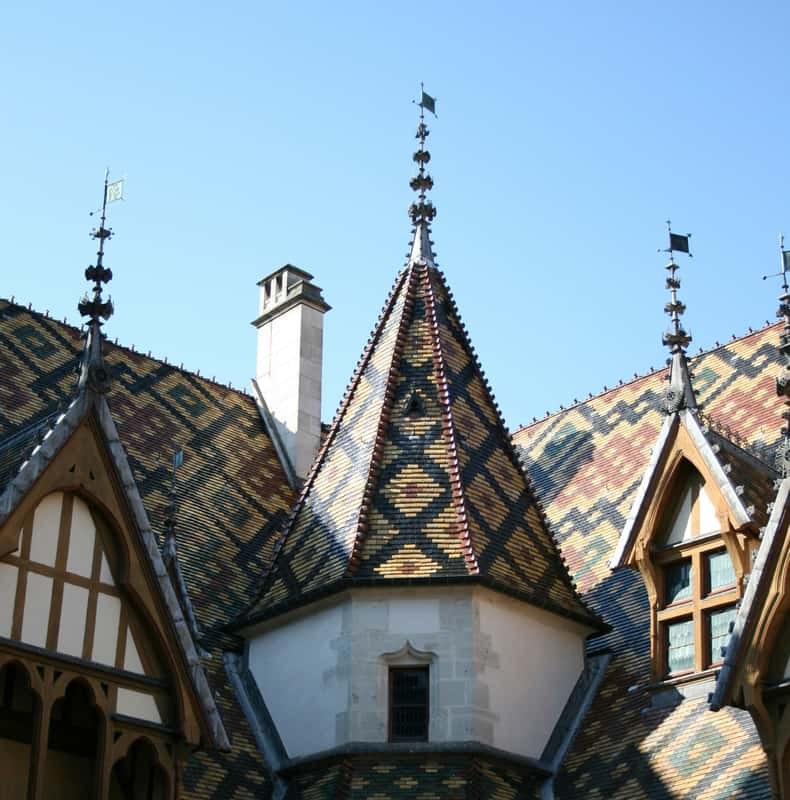
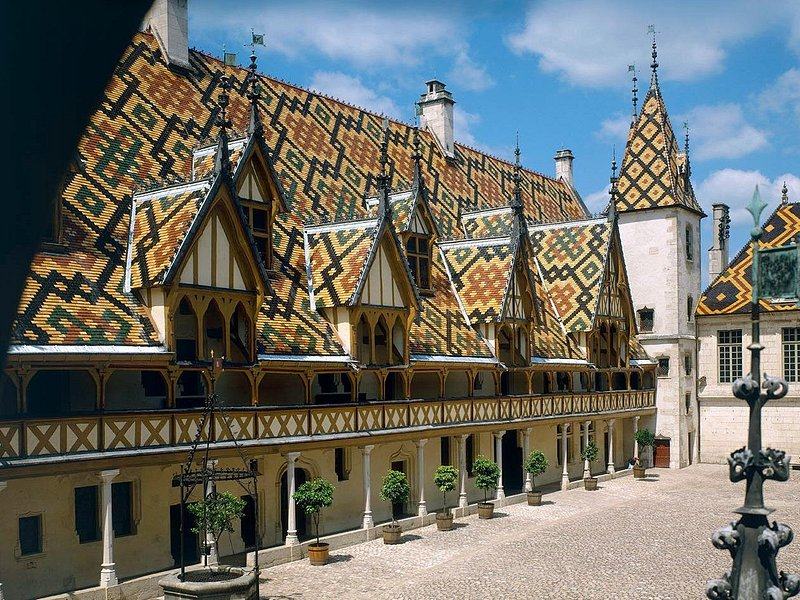
Nicolas Rolin, chancellor of the Duke of Burgundy, and his wife Guigone de Salins founded the Hôtel-Dieu in 1443 as a hospital for the poor. It worked as a hospital until the early 1970s. Today you walk its wards and its courtyard under the roof of glazed, patterned tiles it is known for.
Its best-known work is the Last Judgement polyptych by Rogier van der Weyden. The Hospices have launched a restoration project for it, and a facsimile by the Factum Foundation now hangs in the chapel of the Salle des Pôvres. Ask at the desk which version you will see on your day.
| Period | Hôtel-Dieu open | Ticket desk |
|---|---|---|
| 1 January to 31 March | 9 am–12:30 pm and 2–6:30 pm | Closes an hour before each closing |
| 1 April to 15 November | 9 am–7:30 pm, no lunch break | Last tickets at 6:30 pm |
| 16 November to 31 December | 9 am–12:30 pm and 2–6:30 pm | Closes an hour before each closing |
| 1 January and 25 December | 2–6:30 pm only | Last tickets at 5:30 pm |
You buy the ticket on the Hôtel-Dieu's own booking page, which shows the current price. A TER train ticket to Beaune under 48 hours old earns you a reduced entry. If you would rather not queue, the private day from Paris puts the entry in your fare.
Every November, the Hospices auction their wine under the Halles de Beaune. The date and the weekend around it are on when to visit Burgundy.
Between Dijon and Beaune, the villages follow the slope in a line. Here they are north to south, in the order a tour drives them, with the day that stops in each.
You cannot see them all in a day, and you do not need to. The shared days from Dijon reach Gevrey-Chambertin within minutes, while the white-wine days go further south to Meursault. The grapes and the classification of each village are on the Burgundy vineyards page.
West of Dijon, away from the vines, lies the Auxois and its old stone villages. The villages day from Dijon, at $241 a head, spends about five hours in three of them with an English-speaking driver-guide. It is a day for the history and the streets, and in 2026 it pours no wine.
The first stop, a guided visit of about 45 minutes. You arrive from Place Darcy in the morning, when the village is quiet.
The longest stop, about two hours with a guided visit and free time. Lunch is yours to choose here, because the fare does not include it.
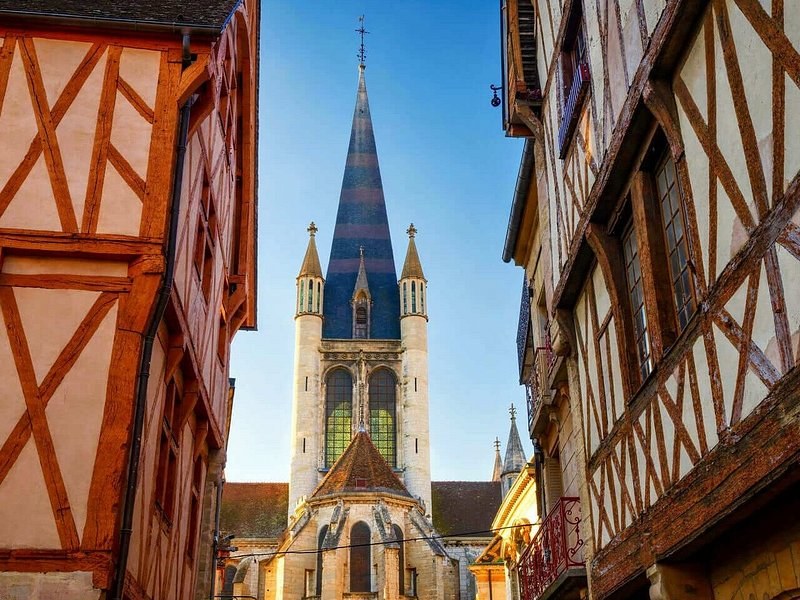
A castle village on a ridge, visited for about 45 minutes. The day then drives back by Aloxe-Corton, where the tasting stopped in 2026, and returns to Place Darcy.
Chablis is the northern end of the region, in the area the BIVB calls Chablis and Grand Auxerrois. It lies outside the UNESCO listing, far from the Côte d'Or, and it is where the days from Paris go. The shared day leaves 6 avenue de Wagram in the morning and is back about 8 pm, twelve hours later.
That day pours at Domaine Jean-Marc Brocard, at Domaine Bersan and at the Caves Bailly Lapierre, a Crémant cellar, at $269 a head. Lunch in Chablis is at your own expense. The private day from Paris adds Beaune and Pommard, at $1,510 for a car of up to two. Both are on Burgundy tours from Paris.
Mâcon sits at the southern end, in the Mâconnais, the last of the BIVB's six areas. The Land Rover day meets you at Mâcon station at 9:30 am, and it sends you train tickets from Lyon. You taste at Vergisson and Solutré-Pouilly, and stop an hour at the Roche de Solutré.
After lunch in Saint-Amour-Bellevue, the day crosses into the Beaujolais crus: Chénas, Moulin-à-Vent, Fleurie and Juliénas. The Beaujolais lies outside the BIVB's Burgundy, so you get two wine regions in one day, at $582 a head.
Find your own town in the left column. The middle column tells you which day goes there, and the right one where you join it.
| Town | The days that go there | Where they start |
|---|---|---|
| Dijon | The shared days, the cellar tasting, the e-bike day and the villages day | 16 Place Darcy, Saint-Bénigne church, 78 rue Monge, La Cave du Palais |
| Beaune | The Grand Cru route day, the 2CV half day, a private route day, and a shared day you can join at 11 am | The tourist office at 6 boulevard Perpreuil, the Hospices de Beaune, or your hotel |
| The Côte villages | Nearly every day from Dijon or Beaune, and the private days | Your kerb in town, or your hotel |
| The Auxois | The villages day | 16 Place Darcy, Dijon |
| Chablis | The shared and private days from Paris | 6 avenue de Wagram, or your Paris hotel at 7:30 am |
| Mâcon | The Land Rover day | Mâcon station, 9:30 am |
The shared days leave Dijon and Beaune every morning, and the private days collect you from your hotel between the two.
The region's size and areas come from the BIVB, the listing from UNESCO, the tower from Dijon's tourist office, and the hours from the Hôtel-Dieu. Everything about a tour comes from its own booking page. Verify before you travel.
Flavigny-sur-Ozerain, Semur-en-Auxois and Châteauneuf-en-Auxois from Place Darcy with a driver-guide. No wine tasting in 2026, so it suits a day off the glass.
From $241 per person
Check Availability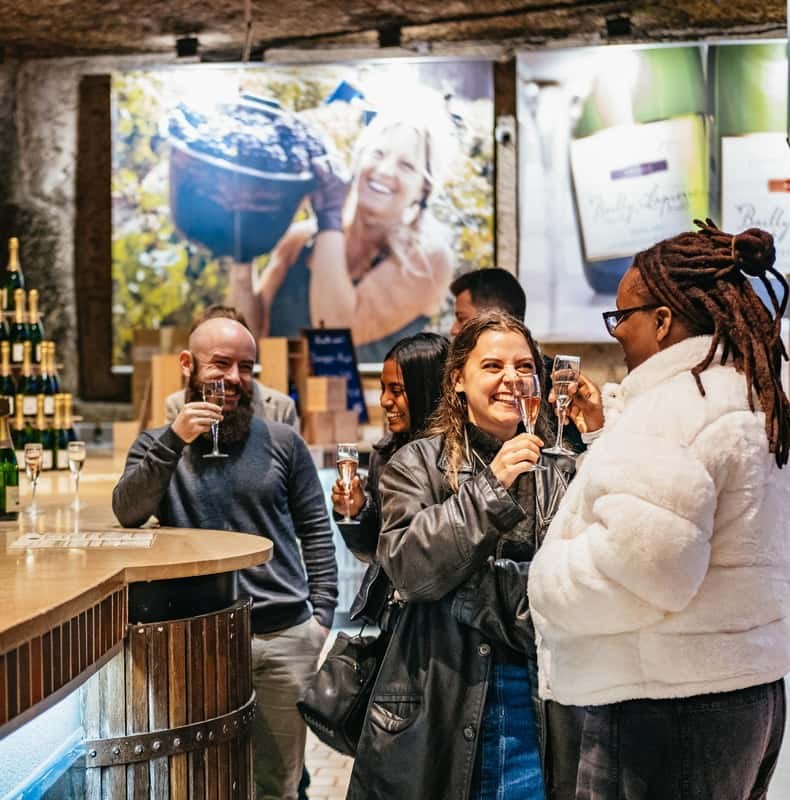
From 6 avenue de Wagram in Paris to Chablis: Domaine Jean-Marc Brocard, Domaine Bersan and a Crémant tasting at the Bailly Lapierre cellars, more than ten wines. Lunch in Chablis is at your cost.
From $269 per person
Check Availability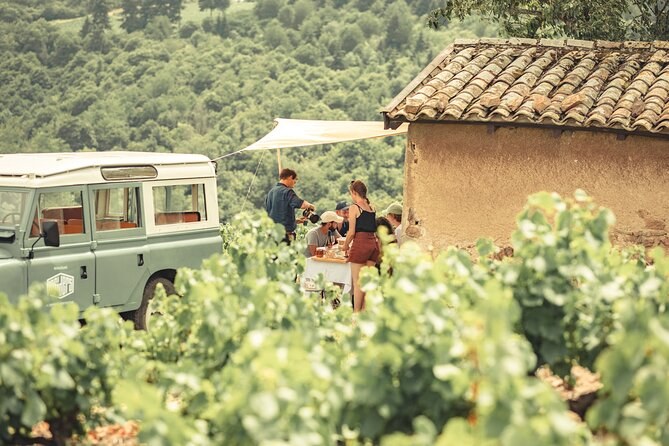
A vintage Land Rover from Mâcon station at 9:30 am, through the Mâconnais to the Beaujolais crus. Lunch is in the fare, and non-drinkers get local grape juice.
From $582 per person
Check AvailabilityNext: see the grapes and the Grands Crus on the Burgundy vineyards page, choose a base on where to stay, or compare every tour on Burgundy Tours.